
Guest post by Aaron Sharp
Quick Answer
Fish an underspin bucktail jig for Lake Texoma stripers by locating shad and feeding fish, letting the jig reach their depth, and retrieving steadily enough to keep its blade turning. A ribbon-worm trailer adds movement and changes the lure’s profile. Rig it straight, keep the hook clear, and adjust jig weight or retrieve speed when the lure leaves the feeding zone.
Key Takeaways
- Check the complete jig and trailer beside the boat before casting. The blade should turn freely and the trailer should swim without wrapping around the hook.
- Choose weight for the depth and retrieve you need. A heavier jig can help reach deeper fish, but too much weight makes shallow rock-bank fishing harder.
- Use early-spring rock banks as places to look for shad, not as a guarantee that stripers are present.
- After a missed bite, inspect the trailer and blade before changing colors or moving.
What Does an Underspin Bucktail Jig Do?
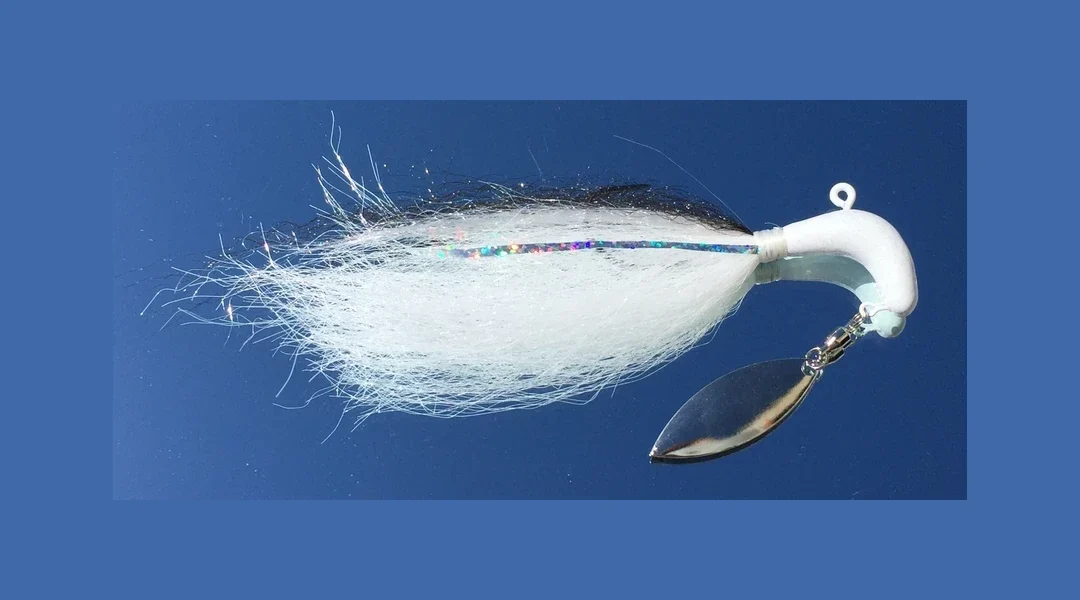
An underspin bucktail combines a weighted head, a hair dressing and a spinner blade beneath the head. The dressing provides a baitfish-shaped profile, while the rotating blade adds flash. A ribbon-worm trailer adds a moving tail behind that profile.
This is a swimming presentation worth considering when you want to cast along a bank, cover a point or retrieve through suspended fish. The goal is to bring the jig through the fish’s depth with its parts working freely.
The ribbon-worm combination and early-spring rock-bank observations discussed here come from Mike “Moe” Oser’s fishing notes. The rigging checks and retrieve adjustments below are practical starting points to evaluate with your own tackle and the fish’s response.
Where Should You Look Before Choosing a Jig?
Start with baitfish. Watch for shad near the surface, feeding activity and birds working an area. Use electronics, when available, to check for baitfish and stripers below the surface and establish their depth.
Moe’s early-spring observation is that warming rocky areas can draw shad, with stripers following the baitfish. That gives you somewhere to begin looking. Check the bank, nearby points and the adjacent deeper water rather than assuming the fish will be against the rocks.
Look for evidence that supports staying: visible bait, fish on the screen, follows or bites. If those clues disappear, check the next stretch or a different depth. A bank that looks right is not enough by itself.
Once you find activity, choose a casting angle that keeps the lure near it. When shad are close to a rocky shoreline, a cast along the bank can keep the jig in that strip of water longer than a retrieve straight out into deeper water.
How Do You Rig a Ribbon-Worm Trailer?
First check that the worm fits the jig’s hook and dressing. The plastic should leave room for the hook to penetrate, and its tail should remain free to move. A long or bulky trailer is not automatically an improvement.
- Check the fit before threading. Hold the worm beside the hook and note where the point should exit so the section on the hook can sit straight.
- Thread the front section evenly. For a trailer mounted along the hook shank, work the plastic onto the hook without bunching or twisting it. Leave the ribbon tail free behind the jig.
- Keep the hook point and gap clear. Do not pack excess plastic into the hook bend or bury the point in the trailer.
- Check the blade and swivel. Hair, loose line or the trailer can interfere with movement. Clear any fouling before fishing.
- Swim the complete rig beside the boat. Try the retrieve speed you intend to use. Watch for rolling, a stalled blade or a tail wrapping around the hook.
Trailer attachment varies with jig design. If yours has little exposed shank or no suitable keeper, use a compatible trailer arrangement rather than forcing a thick worm over the dressing. Recheck the fit after a bite or snag.
Adding a worm also changes the finished lure’s resistance and fall. Establish its depth again after adding or changing the trailer; the same countdown may no longer put it in the same place.
How Much Jig Weight Should You Use?
Use enough weight to reach the fish while maintaining a workable retrieve. Depth matters, but so do wind, line, boat movement and the resistance of the hair, blade and trailer.
Along shallow rocks, begin with a combination you can swim above the bottom without constantly snagging. For deeper fish, a heavier head may help keep the lure down while the blade continues turning.
If the jig repeatedly hits rocks, reduce the sink time, raise the rod tip or try less weight. If it runs above suspended fish, allow more time to sink or try a heavier jig. Change one thing at a time so you can tell what helped.
There is no universal seconds-to-feet conversion. A countdown becomes useful when you check how your particular combination sinks and then repeat it under similar conditions.
What Retrieve Should You Start With?
Begin with a steady swimming retrieve. Use the beside-the-boat check to find a speed that keeps the blade turning and the trailer moving without making the whole lure roll.
After casting, let the jig reach the intended depth and begin reeling. Keep enough contact to notice a bite or a change in resistance. Constant sharp rod snaps can interrupt the swim and foul the trailer; save extra movement for deliberate adjustments.
If fish follow but do not take it, try a brief change of speed or a small lift followed by a return to the steady retrieve. A pause lets the jig sink, so allow for the rocks or other cover beneath it.
In cooler water, try slowing the presentation while checking that the blade still works. When fish are actively chasing bait, a quicker retrieve is another option. Increasing speed can lift the jig, so watch depth as well as cadence.
Which Mistakes Are Worth Checking First?
- Fishing attractive rocks without baitfish. Search for signs of life before committing to a long stretch.
- Changing color before checking depth. Confirm that the jig reaches the fish and swims correctly.
- Leaving a damaged trailer in place. A worm pulled down the hook or wrapped around the point needs attention immediately.
- Assuming the blade is always turning. Inspect the swivel and clear hair, debris or line that interferes with it.
- Dragging an exposed hook through rocks. Swim above the obstruction and adjust weight, sink time or casting angle when contact becomes constant.
- Adding more trailer than the jig can handle. A bulky combination can reduce hook clearance and change the action you intended.
When Should You Try Another Presentation?
An underspin bucktail is one option, not a requirement. If the added blade or trailer is making depth control difficult, try a simpler jig or swimbait. When fish gather directly beneath the boat, a slab spoon may offer a more direct presentation. Surface-feeding stripers may provide an opportunity for a topwater plug.
For those alternatives, see Moe’s freshwater striper fishing lure guide. If cooling-water fish call for a nearly stationary soft plastic instead, read Steve Buckley’s Lake Texoma deadstick fishing guest post.
Frequently Asked Questions
Do you need a ribbon-worm trailer on every underspin bucktail?
No. The trailer changes the profile, movement and fall. Use it when you want those changes, and compare the complete rig with a simpler presentation if fish are not responding.
Should an underspin bucktail touch bottom?
Not necessarily. Fish it at the depth of the stripers or through the baitfish they are pursuing. Around rocky banks, repeated bottom contact can mean the jig needs less sink time, a different retrieve or less weight.
Can you fish this jig outside early spring?
Yes. The rock-bank example is one application. The same presentation can be considered whenever you can reach feeding stripers with a swimming jig. Fish location and activity matter more than assigning the lure to one season.
What should you check after a missed strike?
Check that the worm remains straight, the hook point is clear and the tail has not wrapped around the hook. Inspect the blade and swivel for fouling before making another cast.
Discuss a Lake Texoma Trip With Aaron Sharp
Aaron Sharp operates Sharp’s Striper Guide Service in Kingston, Oklahoma, with trips departing from Alberta Creek Marina. He uses live bait and artificial lures according to conditions and welcomes anglers who want to discuss a particular fishing method.
If learning this presentation is your goal, mention underspin bucktails when planning your trip. Ask whether the season and current bite offer a suitable opportunity. Moe’s Lake Texoma fishing guide directory provides additional trip-planning information.
Call Aaron Sharp at 580-380-5357 to discuss your dates, experience and interest in artificial-lure fishing. Visit Sharp’s Striper Guide Service for more information and arrange your trip directly with Aaron.
About the guest author: Aaron Sharp owns Sharp’s Striper Guide Service in Kingston, Oklahoma, and guides Lake Texoma striped bass trips throughout the year. Learn more about his service and approach on Aaron Sharp’s About page.